Incident management starts in the field
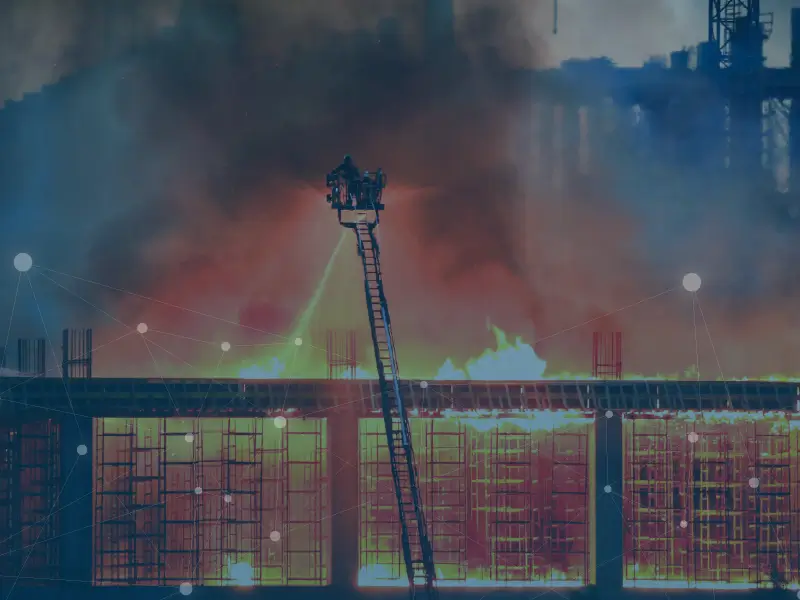
An incident cannot be planned. It happens outdoors, during maintenance, on the road or on site. At that moment, you want to record immediately what is going on: what happened, who is involved and what the impact is. Because your engineers on site rarely have a laptop with them, recording needs to be simple and mobile. Exactly where the incident occurs.
 An incident is not a work order
A fire, accident or other event that brings risks with it: when something happens, you want to act quickly. But where do you record it? Incidents often end up in a service request. The problem is, a service request is an entry point, not a place to record what actually happened.
With an incident, you want to capture the context straight away. Who was involved? What was the situation on site? And what is the impact on safety, the environment or assets? That information does not fit well in a service request. A work order does not help either: it is meant for execution, not for registration, prioritisation or follow-up.
That is why an incident needs its own process. Not just a loose report, but a full lifecycle of recording, follow-up and analysis. It is precisely this distinction that makes incident management effective.
Incident management: a better way
Within IBM Maximo Application Suite (IBM MAS) incident management is part of the Health, Safety & Environment (HSE) solution. The Incident Reporter App allows you to start the incident management process where it belongs: in the field, at the moment it happens, simply using a mobile phone.
Oil & gas: recording an incident under time pressure
Water authorities: safeguarding safety during gas detection
In both cases the same principle applies: the incident is central. Work orders can form part of the follow-up, but not the initial registration.
What good incident management delivers
Because the incident has its own lifecycle, follow-up starts automatically. Those involved are informed based on priority and impact, and you keep control of progress and resolution. At the same time, your maintenance process stays clean: work orders are used for what they are intended for, rather than as a catch-all for everything that goes wrong.
And perhaps most important of all: you build a reliable basis for analysis. Not reporting for the sake of reporting, but to recognise patterns, prevent repetition and manage risks more effectively.
You cannot always prevent incidents. But you can make sure you record them properly, follow them up rigorously and use them to further professionalise your asset management.

Want to know more about effective incident management with IBM MAS and the Incident Reporter App? Contact Gerben ter Horst on +31 (0)6 14 57 21 19 or g.terhorst@gemba.nl.
Look at all blogs


Would you like to discuss your asset management challenges?

Also curious about the possibilities?
Want to know more about the possibilities of IBM MAS? We are happy to think along with you about the practical application in your organization. Contact us via +31 (0)20 482 29 29 or info@gemba.nl.