
Visual inspection: faster and more efficient with Visual Inspection and AI
Imagine you can perform a condition measurement of your assets without the need for an expert to come on site. This is also not necessary for quality controls of production batches or the safety monitoring of installations. A new, ready-made solution for visual inspection with built-in AI brings this within reach: IBM Maximo Visual Inspection
 IBM Maximo Visual Inspection: mature image recognition
We also use image recognition in our daily lives; it is now a mature technology. For example, the smart cameras in our cars read the speed signs on the side of the road, so we know how fast we are allowed to drive. But the possibilities of image recognition software with built-in AI (artificial intelligence) go much further. And the good news for your asset management is that this technology is now easily accessible with IBM Maximo Visual Inspection.
Also as a separate solution for visual inspection
IBM Maximo Visual Inspection is a ready-made solution for visual inspection. The software is part of IBM Maximo Application Suite (MAS), but you can also use it separately and integrate it into an asset management or other business system. This not only gives you an extra pair of eyes, but also allows you to make accurate analyses quickly and efficiently. It works as follows: You capture images of a situation in an image bank, for example via a smartphone, video camera, or drone, and use a label to indicate whether the situation is desired or undesired. In the event of an undesirable situation, you will receive a signal so that you know when it is necessary to take action. The system is self-learning and therefore becomes wiser with every image it is fed.
Widely applicable within asset management
IBM Maximo Visual Inspection can be used in many ways within your asset management. Consider, for example, a condition measurement of difficult-to-reach assets such as the pillars of a bridge. You take photos of the pillars with drones. The software then checks whether there are deviations from the desired situation. If so, you will receive a notification, for example via an app on your smartphone. You can even take different circumstances into account, such as the weather. After all, a wet pillar can look very different from a dry one. It is a matter of expanding the image bank with images of the pillars in various situations. You do this by manipulating the images with augmented reality. For example, it is dry in one image and raining in the other.
From condition measurement to asset detection
Another application of IBM Maximo Visual Inspection is asset detection. For example, you need to maintain the greenery along a road and want to know how many trees or lampposts there are. Or you have won a contract for the maintenance of the lighting in a tunnel and first want to carry out a zero measurement. You take images of the assets with a smartphone, after which you include them in the image bank of IBM Maximo Visual Inspection.
Visual inspection for quality control
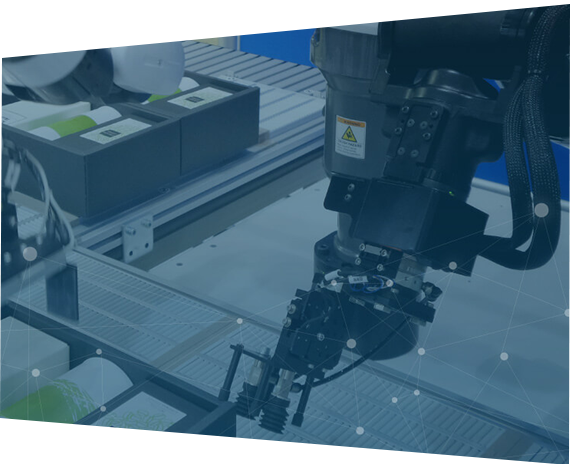
IBM Maximo Visual Inspection also proves valuable in quality control in a factory. This ranges from a coffee manufacturer who has problems with making his packaging airtight to a car manufacturer who wants to monitor the quality of his production. For example, Toyota takes photos of the production all day long with smartphones. The images are forwarded in real time to a data platform for analysis. This enables the Japanese car company to quickly and accurately check thousands of factory parts per day.
Motion detection for safety and security
Motion detection is another interesting area of application. This can be both for security and safety. To give an example of that second aspect: an employee who performs major maintenance on the outside of a storage tank in a harness is in principle stationary. If camera images on the employee’s smart helmet show that he or she is swinging back and forth, something is wrong. But it can be as simple as an employee waving at a camera in a dangerous situation to raise the alarm.
IBM Maximo Visual Inspection: quick to use



Would you like to discuss your asset management challenges?

Learn more
Would you like to know more about Gemba's integration of IBM Maximo and Viewport? Please contact Wouter Schouten: +31 (0)6-52 68 37 43 or w.schouten@gemba.nl.